Showing posts with label Peace in the middle east. Show all posts

Monday, May 10, 2010

Iran: A plan to resolve the impasse


Amongst the many things that has the world excited is the situation with Iran and their illegitimate president Mahmoud Ahmadinejad. While many US governments have swung the pendulum of regime change vs. ignoring regimes from North Korea to Iran through Syria, Lebanon, Libya and others, one thing is almost always clear, some regimes are definitely counter productive to their own people and the world and require adjustment of some sorts. In my book Iran is certainly one of those...without the aid of any media or government spin (ours or others).

Iran's economic health is very good and given a chance to fully participate in the world's business, it will be a thriving force. In reviewing world banks data about Iran and the CIA, I found that;


  • Population: 71MM (2008)
  • GDP: $258B (2008) with 2.6% (2009) growth
  • Unemployment: 11% in 2009
  • Per capita income of $13K
  • Debt: 19.4% to 7.4% of GDP (data is suspect based on source)
  • CO2 emissions higher than their neighbors
  • Literacy - 82% of 15yrs or older
  • Low mortality of -5 of every 1000

Based on some of these data points and more as well as the assets the nation possess, it does appear that Iran has tremendous upside if its government sheds it current approach to governing its people and relationship with the world. Like Cuba, this country is ripe for significant tourism and connection with its people as soon as the climate improves.

This basic information about Iran in mind, let us understand what the true issues are that drive us to act against it;

1. Nuclear proliferation and the opaque stance of the government - This to me is a serious issue and is exacerbated in the new world we live in where Islamic fundamentalism is perpetuating unprecedented terrorism. This is particularly concerning since Iran's stated driver for their Nuclear program is a the anhiliation of the Zionist state of Israel. That is very unnerving, if I were to live next to the threat.

2. Iran is in violation of the IAEA security standards.

3. Human right violations against its own people - No government should be allowed to treat its people poorly. On that scale and how one would define "poorly", many countries starting with China would stand out. While there are global human rights organization, they are without teeth. The only way for Iranian's to be better treated and given a fair chance of competition with the rest of the world is to have a leadership that is willing to join the world community and open itself up to change.

4. While development of nuclear energy for peaceful purposes such as energy generation, medical use is something that should be encouraged, however in the case of Iran, it has been deceitful in its claims of not enriching uranium. It has gone back and forth on its true intention and certainly hidden its development sites from IAEA which raises the level of mis-trust.

So lets talk solution then. Plenty of options that I have heard over the last couple of years that I have weighed upon and think one of those has merits. It has merits only if executed appropriately even if that is stating the obvious. Lets just review the options the world community has to force Iran to change its way;

1. Military action: Iran is a large country with targets spread all over its geography. Last count there were 10 nuclear installations, most of them well underground making them even more difficult to access. A look at the adjoining map gives you an indication to how spread out the installations are. This obviously is not the super secret or latest, which I am sure would be wider and deeper. In addition Iran's military power is not to be sneezed at and would take significant effort and cost to overcome for a US led coalition. Air only incursions as an approach to minimize human life have been analyzed and shed due to the depth of the nuclear installations that even our bunker busters that were used in Afghanistan will be useless. Military experts have essentially agreed to the fact that invasion of Iran is a more costly and fool-hardy approach to resolving this crisis. Further....who really has the money without completely bankrupting themselves, considering any coalition would mean 80% US and 20% other, we are already thinly stretched to venture another adventure.

2. Diplomacy: One of the tenets of diplomacy is a level of trust parties bring to the table. Considering that is an item that has eroded since the Shah was booted out in the 70's and currently is negative, it is unlikely discussions will go forward. The various interlocutors on Iran's behalf are themselves not sure about Iran's intent making it awkward for them to make a case. Iran has had several opportunities to come to the table especially from the start of President Obama's term when he famously quoted at his inguration speech, "...are willing to unclench their fist, they will find an extended hand from us" as well as eloquent Cairo university speech have clearly not encouraged Iran. Even the efforts of our partners in the EU have not received much hope. While diplomacy is certainly a window keep ajar, our next option is really the key to make the needle move.

3. Sanctions: Historically speaking sanctions are toothless dud's. However if it were to be enforced, in the case of Iran it could yield spectacular results long term while in the short term will hurt its population, a sad collateral damage. To emphasize this let us consider the map here for a moment;


  • We own the eastern boundary directly or indirectly in Pakistan and Afghanistan. That said there are a few tactical challenges here but given the terrain of the region and the people's unflinching loyalty to a quick buck. The red lines indicate a tentative relationship with the nations owning those boundaries.
  • In the south our naval prowess combined with already existing presence in the straits of Hormuz, the Persian Gulf, Gulf countries and Saudi Arabia gives us tremendous influence in the area.
  • In the West, our new friends in Iraq and historical enemies of Iran will ensure we will continue to own that border for this purpose.
  • In the North Western side, Turkey, Armenia and Azerbaijan are all US allies who want to be part of the NATO or are large US aid recipients. Time to call in those chits. In addition we have bases in the area with strong relationships and hence the green lines.
  • In the north, the Caspian sea with the help of the Russians, will again be in our column.
  • Lastly on the North Eastern side, Turkmenistan is a country we are most likely going to have a base in sooner or later. Right now we have an agreement for the NATO to be a supplier and transit point. We can assume we will have sufficient influence to enforce sanctions from there too.
So the approach to sanctions against Iran would need to be a complete seize of all routes, land, air and water in to the country. Allowing nothing to go in or come out. There are obviously implications to it that are more tactical than strategic. As a result we will be able to ride them out and bend Iran back in the direction of the right.

Let us consider the implications so there is clarity on what they are and how we can mitigate them;

1. Immediate inflation in the country as traders hoard and government rations. This could hurt the majority of the population that is considered lower middle class. However it could also trigger the final assault on a unpopular regime and potentially change it for the better. One can hope.

2. Trade partners will hurt, specifically China, Russia and Dubai. This could be telling to the global financial markets but again I have to think it is temporary as the overall exposure to Iran has been limited for many years for both the EU and US.

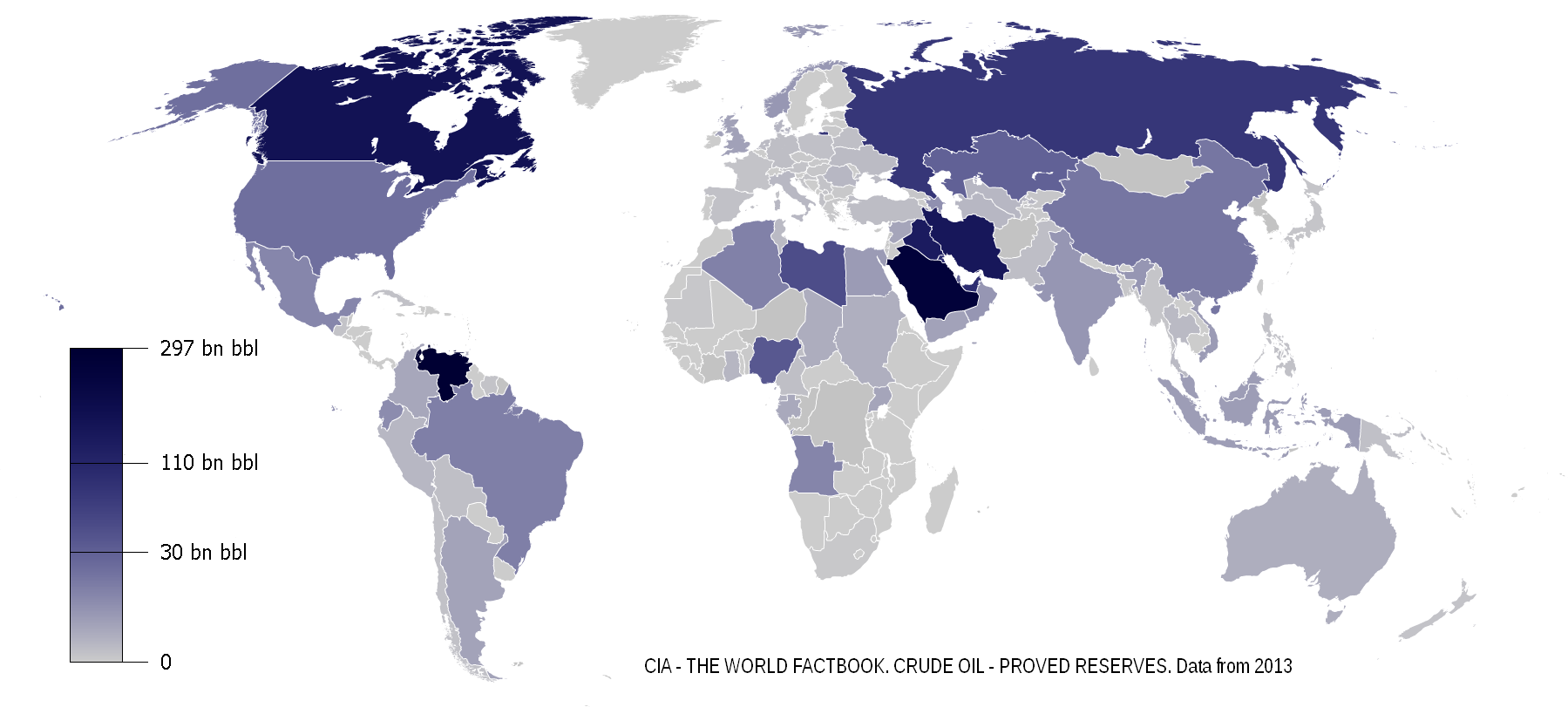
3. Oil, most folks would think would be the largest impact. There is more myth than reality here. Reason being there are doubts about the reliability of official OPEC reserves estimates, which are not provided with any form of audit or verification that meet external reporting standards. Further a system of country production quotas was introduced in the 1980s, partly based on reserves levels, and there has been dramatic increases in reported reserves among OPEC producers. While there is no doubt Iran has the 3rd largest known reserves in the world and hence it the 3rd largest producer, with sanctions, OPEC can increase production through its other member states. Bottomline we wont miss Iran's oil for a while....however OPEC has to sign up to ensure oil prices and futures do not sky rocket while ensuring production levels match current levels. I think it can be made possible.
4. There may be a surge of terrorist activities by sympathetic groups to Iran such as the Hezbollah. There is not specific mitigation than what most governments are already engaged in.

It is necessary to help Iran change its mind when the US, Russia and other countries are taking definite steps to reduce nuclear arsenal. Infact it is President Obama's vision to see a world without nuclear weapons. In such a futuristic environment, fortified by the fact that we should be expending resources on human progress not on ways to destroy it. Iran with its intrinsic assets and potential should direct those energies to improve their peoples stock, take a leadership role to help with Afghanistan, Pakistan, Iraq, reduce its support of the Hezbollah and terrorism for what ever reasons and join the world's community. We could do with more peace.

So bottomline, I say we need to squeeze Iran...I think 30-90day's from a disciplined and enforced seize from the day it starts should be able to get Iran to;
1. Open the doors to IAEA for a thorough investigation
2. Shutting down of all enrichment plants
3. Change their stance on Israel

This could lead to Iran re-joining of the world community and more one day (hope).

***

Wednesday, July 22, 2009

The United States of Israel and Palestine


Consider this setting; Jerusalem, Israel, its a little after dusk one early June in 2005. An Arab gentleman settled in the US, an American Jew who had immigrated to Israel, an Israeli Jew and me an Indian Hindu settled in the US are sitting together at a roadside cafe to share a dinner meal. All of us come from different places, practice different religions, different educations, variety of political ideals, yet we had a wonderful meal and a great conversation. The fact that Jerusalem was (& continues to be) in turmoil with its Arab neighbors had no visible or perceptible impact to the dinner party. Our discussions were wide ranging that I can not recall it, but I do remember that it was warm, friendly and that we left smiling and happy.

That incident has since been playing at the back of my mind, never quite clear why until recently I realized that the dinner was about "Unity" of mind, needs and spirit.

When President Obama went to Cairo to deliver what turned out to be yet another articulate and passionate argument for the world at large to change the way it goes about its business, it struck me that perhaps the way everyone seems to be heading towards a solution for the Israeli-Palestinian is actually wrong. Yes it is a cliché! But the reality is that this multi-flavored single dimensional solution to an age old problem is not practical as history has shown us. So my proposal to eliminating the problem is "Unification"...yes, the "United States of Israel and Palestine" and let us not get hung up about whether it should be Israel or Palestine that should come first in the naming convention. The unified state is not by any means a new or radical idea. It has been explored since the mid 1940 under a proposal called “Binational Solution”.


The UN decided in 1947, in its post WWII wisdom to partition Palestine into a Jewish and an Arab state, and a UN-administered Jerusalem. Sure enough the Arab states rejected it as is still the case that they have not recognized Israel (sans Egypt and Syria). Israel accepted it and later in 1947 declared its Independence. While the land of Palestine has been fought over for centuries from crusades on to now for religion, power, money and more, I don’t believe there ever has been a victor. However I believe the future has a chance if looked at from a new lens, one that is devoid of too much attachment to the history and the hate that typically is associated with it. As such I will resist going in to anymore history since this essay is forward looking and will defeat the purpose if we look too much in the rear view mirror.

The rational behind the unification idea is essentially a default stemming from the failure of existing proposals;


I. Two state solutions have been proposed, attempted and failed miserably for a variety of reasons.

Since the 1949 Armistice agreements with Egypt, Lebanon, Jordan and Syria to the Camp David accord of 2000 between Israel and Palestine, there have been about 7 different treaties that got signatures in addition to several more plans that have been published. The key to all this is that both the Palestinians and Israelis have their own piece of sovereign land and that they exist as peaceful neighbors. Reality is that Israel can never really and truly live peacefully in a region that is intrinsically predisposed to hate it. So while by some miracle of fate, two states are formed the likelihood of sustaining that new reality is flimsy at best. Also I question that if 60 years of treaties and plans have not been able to move the needles, what is the wisdom in continuing to pursue this Two State agenda.

Starting to look at it from a security perspective, Israeli’s will never feel secure as an island nation; surrounded by its enemies. It really does not change anything from today’s status quo. Israel today spends about the equivalent of 8% of their GDP on their defense which is a significant number and that number will continue to grow higher as the sovereign state of Palestine will look at arming itself. A right it will gain with total independence. Add on to that others in the neighborhood will add on to their own spending (2008 est military spending as a percentage of GDP Jordan 8.6%, Saudi Arabia 10%, Iraq 8.5%) which before one knows will turn in to a middle east arms race.. a real nightmare. This will accentuate the instability that will by now be exacerbated by social issues that will worsen, such as


  1. Lack of education – Increased government spending on military typically makes education and other social programs a casualty, e.g. Pakistan, Central American banana republics, Iraq (pre “post Saddam”), North Korea.

  2. Higher unemployment – Considering that spending by the government is taking their money out of the country, the internal economy suffers by way of trade imbalances.
  3. Spread of disease – Inherently medical care in the region is not one of any merit, with less money put away for medical care, impacts will hurt the population directly.


End result is the increasing spread of hopelessness amongst the youth, violence, political upheaval and regional instability that will require Arab countries and Israel to take offensive actions against each other as a deflection tactic, i.e Status Quo


Also the fact that the Palestinian territories are not contiguous makes it an inherent challenge to manage. An example is Pakistan and Bangladesh, which were part of one country (Pakistan) though not contiguous, till splitting to form two independent countries.


II. The United States of America faced a fairly similar situation with racial segregation that is solved (& continues to evolve). This is similar in that, 2 large bodies of people differentiating upon something they did not have control over.


The history of the US of A is deeply ingrained in racial segregation that stemmed from slavery. While by way of law segregation has been eliminated and by way of evolved thinking of our good citizens the practices of racial discrimination has been minimized though not completely eliminated, for humans will use racial differentiation as a tool of identification and self actualization and perhaps will always do as any living species does in some form, the key though is that America has progressed under one flag. While the nation's history post independence is over 200 years, the evolution towards true unification of minds and spirits has taken a while and continues to evolve.

A basic lesson from America's history is that people no matter where they come from or what their religious affiliations are or what they do or not for a living can live in reasonable harmony with each other if united. Unification was the key. If the result of the civil war had gone the other way and the confederates had won, we would not have been part of this great nation as ours has turned out to be. Ours is a living testament to unified power.

III. Two state solutions have failed all over the world that was created in a number of different flavors and iterations.

While the failure’s have been for a variety of reasons and the implications of failure plural, the key remains that when one looks at a geographic mass that was and perhaps is homogenized from a people, culture, economics, aspiration, race, food, language, etc. perspective and is then split for political reasons, it can not sustain the division. Let us look at some specific examples of failed two state’s,
a. India-Pakistan: Some may claim this has not failed since the countries have existed for 60 years now albeit with multiple conflicts that both sides claim victory. That India is now a fairly prosperous country laying claim to some of the brightest minds of our contemporary times is not quite the success, since Pakistan's survival as a nation is a doubt now with the Talibanisation of its western regions, their treasury has no money and their people continue to lack education. India's poverty is increasing with its burgeoning population not decreasing with its prosperity. India has no friends in its neighborhood and bears little influence in the new political world. India has not helped Pakistan avoid its impending doom aside from assiduously breaking it up aka Bangladesh.
b. East & West Germany: No argument needed they are one country now.
c. North and South Korea: One a growing, vibrant and prosperous democracy and the other a tottering dictatorial regime with no real economy.
d. North and South Vietnam: No argument needed they are one country as of 1975.


There are others that in the recent time that have formed their own countries like Bosnia, Herzegovina and others. I think it is too early to say much but based on my logic they are doomed to fail.


Further merit to the unification notion is the European Union, which is showing us that economic unification has merit to it and could be viable enough to be expanded towards geographic and political unification. Strobe Tallbott of the Brookings institute in his new book “The Great Experiment” makes a fair argument that the world in 100years will see nationhood as we know abandoned and all states will except one global authority. I am not convinced, but 100 years from now is light years in terms of knowledge evolution of people in this internet age, so who knows.


Why I think the United States of Israel and Palestine will be successful;


People – They are essentially the same people. Any one who has walked through the old city in Jerusalem will tell you that while there are separate quarters to the naked eye, if one paid more attention you will see more similarities than differences. The same harsh weather and water scarcity have taught them to adapt in a similar fashion. The foods they eat, the cloths the modern Israeli or Palestinian wears, their worldly aspirations for good education, good life, family etc are identical. They are both in quest for that elusive peace. In addition both their populations are very close in numbers, approximately 5Million each. This ensures that one group does not suffer the vagaries minorities typically tend to suffer. The fact that 130K Israelis live in settlements in West Bank today symbolizes a level of integration, albeit one that is not quite looked at that way yet. However once there is unification and the walls and fences are brought down, the land grabbing usurpers of today will become the friendly neighbors of tomorrow.


Economy – Israel’s economy is fairly robust, with a GDP of $205B in 2008, low inflation and unemployment. It also has the advantage of having some of the brightest minds in the world combined with a can do attitude. Palestine on the other hand has a rather poor economy with a GDP of only $11B, high inflation and very high unemployment. While it may not seem in pure business terms to try to merge a profitable company with an unprofitable one, consider that it is a strategic merger that will help increase substantially the stability of the region which has a direct impact to the economy. Also consider that much of the Palestinian potential has not been leveraged due to the insistent fighting, inherent poor infrastructure and lack of opportunities. The unification will by default correct that, unleashing a very potent potential of the youth of both groups.


Security – To me this is the key driver. Unification will inherently reduce and minimize greatly the tensions in the region, since the enemy is now part of the family and the family takes care of its own. Well even if it is not that dramatic, the motivations for tensions today will cease. Lebanon will have no cause to shoot rockets in to Israel, Palestinians will have no cause to throw rocks, Iranians can stop plotting with the Hamas and so on. The regions political dynamics will change and yes they may find something else to bicker about, but those will be minor compared to where we are currently.

So when the sums of all these parts are looked at holistically, it is hard to see the differences while the similarities stack up exponentially.


Challenges with the unification;

While I am convinced that unification is the only way to progress peace in the region, it is not going to be easy. Here are some challenges that I can foresee;


I. Formation of the government

While the type of government may not be a challenge since they are both democratically elected governments, the challenges will be with the governance model and how the government will be populated. If an Israeli becomes the Prime Minister, will a Palestinian be their Defense Minister? How do the two nations share what were once very closely guarded secrets, a larger issue for the undeclared nuclear Israel? What will be the level of trust? That said we have precedence’s from the unification's of Germany and Vietnam that could be leveraged, though the fact that Israel is a nuclear state does pose a fresh set of challenges. At what stage will all the secrets of both sides be disclosed to the new government and what happens from then on.

Governance of a new country is typically a challenge since processes, procedures, policies, etc need to be developed. However in this case a lot can be leveraged from the two functioning governments, but there will still be challenges in the way every day administration works.


II. True integration of the neighborhoods

It is likely that the true integration of Israeli and Palestinian neighborhoods may never happen. But some level of assimilation is bound to happen by way of free movement of population and basic real estate economics. It is very likely that there will be reconstruction and redevelopment efforts that will occur and attract a mixture of people. Improved economy will help with integration as people of specific income brackets will come together no matter if they were Palestinians or Israelis. So while this challenge is not one different from any where else in the world, its mitigation will occur gradually over time based on social, political and economic progress.


III. Integration of minds and spirits

How do you replace hatred and distrust developed and built over 60+ years with one of trust and common patriotism for a new nation? This is going to be the biggest struggle. On a positive note, this will correct itself with new generations as they will not grow in the tension and the hatred their parents experienced. But the 1st several years, this is a true challenge that will need some work. Unfortunately I am not aware of precedence’s, short of getting Gandhi, King and Mandela out there on an extended mission. But jokes aside, this is the biggest challenge that will confront the unification.


While there may appear to be more challenges than I can list or articulate, it is certainly a better problem to solve than what happens on a daily basis trying to falsely mitigate the tensions. What sort of life is that?


So for many peace in the middle east has and may remain a joke, but I believe a new look at old ideas is perhaps our best chance of giving peace a real chance.


PS - For anybody set to accuse me of being an idealist here, consider that for a foundation to be built, a level of idealism has to be instilled. The 21st century did not take nobility of action out, but in a way is forcing us to go back to those roots and admit right and wrong, no matter the consequences. To me the unification of Israel and Palestine is that corner stone, peace to the holy land and prosperity to a tortured population is a much desired outcome and I hope we are closer to it than we care to admit.